
Medium Rare Steak Temp
Have you ever cut into a steak at a restaurant and seen that perfect, warm red center? It looks juicy, tender, and absolutely delicious. That is the magic of a perfectly cooked medium rare steak. For many steak lovers in the USA, this is the only way to enjoy a good piece of beef.
But getting that exact medium rare steak temp at home can feel tricky. You might worry about undercooking it or accidentally ruining it by cooking it too long. It’s a common fear. You want that restaurant-quality result, but you are not sure how to get there without a fancy chef standing next to you.
The good news is that mastering the medium rare steak temp is not a secret skill reserved for professionals. It is a simple science that anyone can learn. All it takes is understanding a few key numbers and having a simple tool. Once you know the right temperature, you will never have to guess or cut into your steak to check again.
In this guide, we will walk through everything you need to know. We will cover exactly what medium rare means, why it is so popular, and the fool proof way to achieve it every single time. We will also explore other doneness levels, so you know how they compare. Get ready to become the steak hero of your own kitchen. Your journey to the perfect steak starts right now.
What Exactly Does “Medium Rare” Mean?
When you order a steak medium rare, you are asking for a specific experience. It is not just about the colour; it is about the feel and the flavour. A medium rare steak is cooked to an internal temperature that creates a perfect balance. The outside has a nice, browned crust from the heat, while the inside stays warm and very tender.
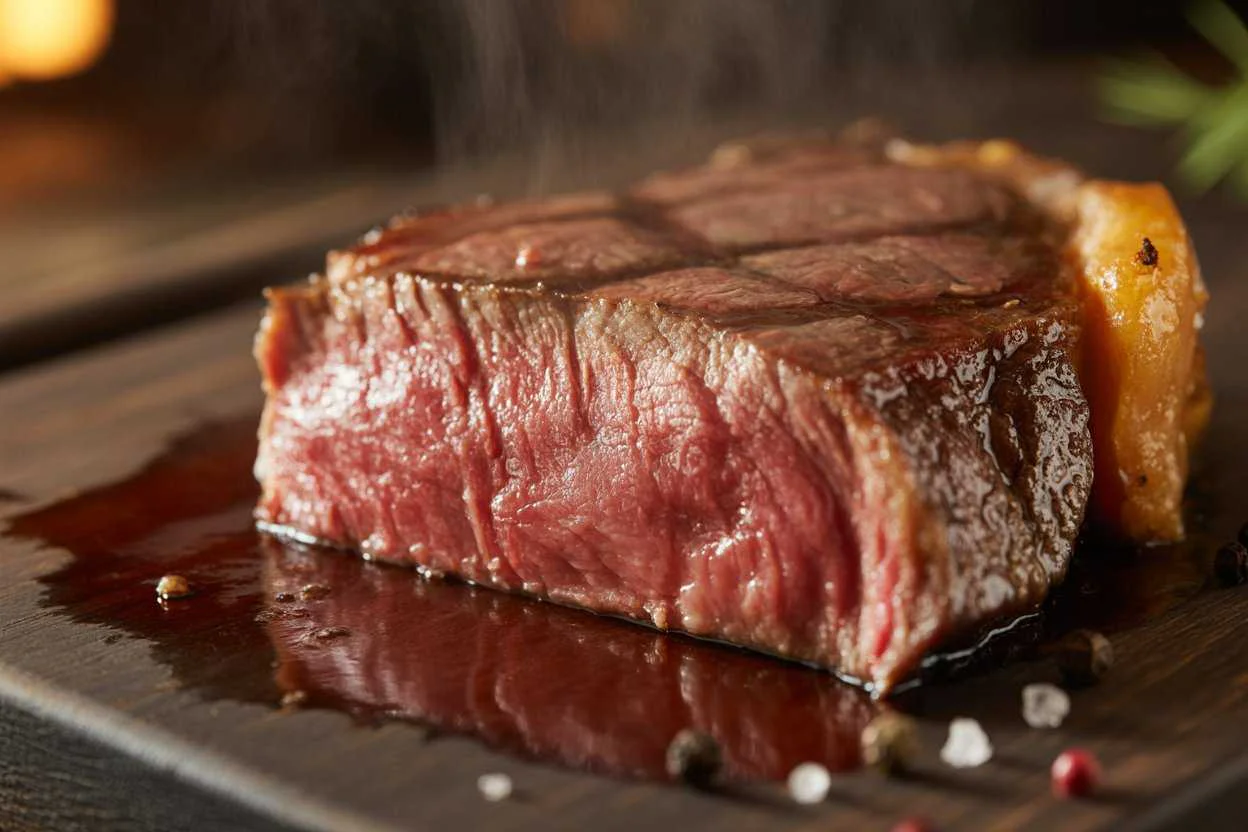
The official medium rare temp for beef is between 130°F and 135°F. When the steak reaches this point, the fat inside has begun to melt, which makes the meat taste buttery and rich. The centre will be a bright red colour, but it will be warm, not cold like raw meat. The texture should be soft to the touch, similar to the flesh at the base of your thumb when you relax your hand.
Many steak experts and chefs consider medium rare to be the best way to enjoy a high-quality cut of beef. It allows the natural flavour of the meat to shine through without being overpowered by cooking. It also keeps the steak incredibly juicy. When you cook past this point, the muscle fibres start to squeeze out more and more moisture.
Understanding this temperature is the foundation of steak cooking. Once you know what medium rare feels and looks like, you can confidently cook for yourself and your family. It’s the golden standard that most steak lovers aim for, and now you know exactly why. It’s the point where the steak is fully cooked but still retains its soul.
Why the Right Medium Steak Temp Changes Everything
Cooking a steak is not just about following a recipe; it is about understanding heat. The difference between a disappointing, tough piece of meat and a memorable, tender meal often comes down to just a few degrees. This is why knowing the right medium steak temp for your preference is so important.
If you pull your steak off the heat too early, you might end up with something too cool and chewy in the center. On the other hand, if you leave it on too long, you risk a well-done steak that is dry and lacks flavor. The target temperature is your guarantee. It takes the guesswork and the anxiety out of cooking. It turns a stressful experience into a simple, scientific process.
When you aim for the perfect medium steak temp, you are controlling the outcome. For a medium rare result, you stop the cooking process right as the internal heat hits that sweet spot of 130-135°F. This ensures that the proteins haven’t tightened up too much, which is what happens when meat gets overcooked and becomes tough.
This precision also affects how you serve the steak. A steak cooked to the correct medium rare temp will be juicy from the first cut to the last. The juices stay inside the meat fibres instead of spilling out onto the cutting board. When you take the time to hit that target temperature, you are not just cooking dinner; you are creating a meal that feels special, and that is something everyone deserves.
The Essential Tool: Your Thermometer Is Key
To hit the perfect medium rare steak temp every time, you need one crucial tool: an instant-read meat thermometer. Guessing by touch or looking at the clock is just not reliable. Steaks come in different thicknesses, and grill temperatures can vary. A thermometer takes all the mystery away.
A good digital thermometer gives you an accurate reading in just a few seconds. You simply insert the probe into the side of the steak, aiming for the very center. This gives you the true internal temperature. Without this tool, you are essentially cooking blind. You might get lucky sometimes, but you will never be consistent.
You do not need to spend a lot of money on a fancy thermometer. There are many affordable and reliable options available at grocery stores or online. Look for one that is easy to read and gives a fast reading. This small investment will immediately improve your cooking. It is the single most important step to guarantee you hit that perfect medium rare temp.
Once you start using a thermometer, you will wonder how you ever cooked without it. It builds your confidence. You will know exactly when to take the steak off the heat, and you will trust the result. It turns cooking steak from a stressful guessing game into a fun and precise activity where you are always in control.
Step-by-Step: How to Reach the Perfect Medium Rare Temp
Ready to cook? Let’s walk through the simple steps to get that ideal medium rare steak temp. First, take your steak out of the fridge about 30-40 minutes before you plan to cook it. Letting it come to room temperature helps it cook more evenly. A cold steak in a hot pan will cook unevenly, leaving the outside overdone before the inside even warms up.
Next, pat the steak completely dry with paper towels. Moisture is the enemy of a good crust. Then, season it generously. You can use just salt and pepper, or your favorite steak rub. Don’t be shy with the salt. It will help form that beautiful crust and season the meat all the way through.
Now, heat your pan, grill, or cast-iron skillet over medium-high to high heat. Add a high-smoke-point oil like avocado or canola. When the oil is shimmering, carefully place the steak in the pan. Leave it alone! Let it sear without moving it for a few minutes. This creates that flavorful brown crust. Flip it once and sear the other side.
This is where your thermometer becomes your best friend. Start checking the temperature. For medium rare steak temp, you are looking for 130°F to 135°F. Remember, the temperature will continue to rise a little while the steak rests. So, you can pull it off the heat when it’s about 5°F below your target. For medium rare, take it off around 125°F if you plan to let it rest.
The Crucial Resting Period
You have pulled your steak off the heat right at the perfect medium rare temp. Your instinct might be to cut right into it, but wait. This next step is just as important as the cooking itself. You must let the steak rest.
Place the cooked steak on a cutting board or a warm plate. Loosely tent it with a piece of aluminum foil. Let it sit for at least 5 to 10 minutes, depending on the thickness of the steak. This allows the juices, which have been pushed to the center by the heat, to redistribute evenly throughout the meat.
If you cut into the steak immediately, all those delicious juices will pour out onto your cutting board. You will be left with a drier, less flavorful steak. By resting it, you let the muscle fibers relax and reabsorb the moisture. When you finally cut into a rested steak, the juices stay right where they belong—inside the meat.
During this resting time, the internal temperature will also rise a bit. This is called “carryover cooking.” If you pulled your steak at 125°F, it will likely climb to that perfect medium rare temp of 130°F while it rests. So, by being patient, you are not just saving the juices; you are also letting the steak finish cooking to its absolute perfect state.
Medium Rare vs. Other Levels of Doneness
Knowing where medium rare fits in with other doneness levels helps you understand the full picture. Steak doneness is a spectrum, and each level has a distinct temperature range and texture. It is helpful to know these, whether you are cooking for a group with different tastes or just confirming your own preference.
On the low end is rare steak. This is cooked to about 120-125°F. The centre is deep red and cool to the touch. It is very soft. Next is the medium rare steak we have been discussing, at 130-135°F, with a warm, red centre.
Then we move to medium steak temp. This is typically 140-145°F. The centre becomes a warm, hot pink colour and is firmer. There is less juiciness than a medium rare steak. After that is medium well steak, cooked to 150-155°F. It has only a slight hint of pink and is much firmer, with significantly less moisture.
Finally, well done steak is anything above 160°F. It is gray-brown all the way through and is very firm and dry. While some people prefer it this way, it requires very careful cooking to avoid being completely tough. As you can see, the medium rare temp sits right in the sweet spot where the beef is safely cooked but still maximally tender and juicy.
Cooking Methods That Work Best for Medium Rare
You can achieve that beautiful medium rare temp using several different cooking methods. Each one gives you a slightly different result, but all can lead to steak perfection. The most popular method is pan-searing. Using a heavy pan, like cast iron, gives you incredible control and builds a fantastic crust.
Grilling is another favourite, especially for that smoky flavour. Whether you use gas or charcoal, you want a hot side for searing and a cooler side to finish cooking gently. You can sear the steak over high heat for a couple of minutes per side, then move it to the cooler side to gently come up to your target medium rare temp.
The reverse sear method has become very popular among home cooks. You start the steak in a low oven (around 275°F) until it is about 10-15 degrees below your target. Then, you finish it with a quick, hot sear in a pan. This method gives you an edge-to-edge perfect pink color and an amazing crust.
Sous vide is the ultimate precision method. You seal the steak in a bag and cook it in a water bath set exactly to your desired medium rare temp, say 131°F, for an hour or more. Then, you just need to sear it quickly for a few seconds on each side. No matter which method you choose, the goal is the same: that perfect internal temperature.
Common Mistakes That Ruin Your Medium Rare Steak
Even with the best intentions, a few common mistakes can stop you from reaching the perfect medium rare steak temp. The biggest mistake is not using a thermometer. Relying on cook times or the “finger test” is unreliable. Steak thickness, starting temperature, and your equipment all affect cooking time.
Another frequent error is moving the steak around too much in the pan. You need to let it sit and develop that crust. If you flip it or poke at it constantly, it won’t brown properly. Give it time. Usually, 3-5 minutes per side over medium-high heat is a good starting point, but let the visual cues of a brown crust guide you.
Cutting into the steak to check if it’s done is a classic mistake. That little cut creates a hole where all the precious juices can escape. This is why a thermometer is so much better. You get an accurate reading without damaging the steak. Also, we already mentioned not resting the steak. Cutting it right away guarantees a loss of juices.
Finally, cooking a cold steak straight from the fridge is a problem. The outside will overcook before the inside even gets warm. Remember to let it sit out for a bit first. Avoiding these simple mistakes will immediately improve your results and help you nail that medium rare temp consistently.
Selecting the Best Steak Cuts for Medium Rare
While you can cook almost any steak to a medium rare temp, some cuts are simply better suited for it. The best steaks for medium rare are typically the more tender cuts that come from parts of the cow that don’t get as much exercise. These cuts have less connective tissue and are naturally more buttery.
The Ribeye is a top choice for many. It is well-marbled with fat, which renders and bastes the steak from the inside as it cooks to medium rare, making it incredibly flavourful and juicy. The New York Strip is another excellent option. It is a bit leaner than a ribeye but still very tender and flavourful.
Filet Mignon is the king of tenderness. It is a very lean cut, so cooking it to medium rare is crucial to keep it from drying out. The gentle heat preserves its buttery-soft texture. The Porterhouse or T-Bone steak offers the best of both worlds, with a tender filet on one side and a flavourful strip on the other.
For a great value, consider a Sirloin steak. It can be very tasty when cooked to medium rare, but it’s important not to overcook it as it is a leaner cut. Choosing a good quality steak from these cuts and cooking it to the perfect medium rare temp is a combination that is hard to beat.
Temperature Guide for Steak Doneness
To make things easy, here is a simple table that outlines the internal temperatures for each level of steak doneness. You can use this as a quick reference whenever you cook. Remember to always insert your thermometer into the thickest part of the steak for the most accurate reading.
| Doneness Level | Internal Temperature Range | Description of Center |
|---|---|---|
| Rare | 120°F – 125°F | Deep red, cool center, very soft. |
| Medium Rare | 130°F – 135°F | Warm, bright red center, very tender and juicy. |
| Medium | 140°F – 145°F | Hot pink center, firmer texture. |
| Medium Well | 150°F – 155°F | Slightly pink center, firm, less juice. |
| Well Done | 160°F+ | Gray-brown throughout, firm, little moisture. |
Use this table as your guide. For the best medium rare steak temp, you are aiming for that 130-135°F sweet spot. Keep this chart handy in your kitchen, and you will always have the perfect target in mind.
Frequently Asked Questions About Medium Rare Steak
You likely still have some questions about cooking the perfect steak. Here are answers to some of the most common questions people have about medium rare beef.
1. Is it safe to eat a steak cooked to medium rare temp?
Yes, it is generally considered safe. Whole cuts of beef like steaks have a safe surface that is fully cooked by the high heat. Any bacteria would be on the outside, which is seared. Ground beef is different and must be cooked to a higher temperature.
2. How long should I cook a steak for medium rare?
Cooking time depends on thickness and heat. A 1-inch thick steak might take about 4-5 minutes per side over high heat. However, you should always use a thermometer to check for the exact medium rare temp rather than relying on time.
3. Can I cook a frozen steak to medium rare?
Yes, you can! It is actually a great method. Cook it straight from frozen in a hot pan, flipping often. It will take about 50% longer. The benefit is that it’s harder to overcook the outside before the inside reaches medium rare temp.
4. What does a medium rare steak feel like when I touch it?
If you touch the flesh under your thumb (relaxed hand), that’s what rare feels like. Touch your thumb to your middle finger and feel that same spot—that tension is what a medium rare steak should feel like. It’s a helpful guide, but a thermometer is still best.
5. My steak came out gray, not pink. What went wrong?
This usually means the pan wasn’t hot enough, or the steak was cooked too slowly. You need high heat to create that brown crust quickly, while leaving the inside at the perfect medium rare temp. If the heat is too low, it will cook through slowly and turn grey.
6. Is blue rare the same as medium rare?
No, they are very different. Blue rare (or “Pittsburgh rare”) is only seared on the outside for a few seconds. The inside is still completely raw and cold. Medium rare is cooked enough that the inside is warm and the fat has started to render.
Final Thoughts on Your Perfect Steak Journey
Learning to cook a steak to the perfect medium rare temp is one of the most rewarding skills you can have in the kitchen. It takes the stress out of cooking a special meal and replaces it with confidence and delicious results. You now have all the knowledge you need: the target temperature, the essential tools, and the simple steps to follow.
Remember, the key takeaways are using a good thermometer, letting your steak rest, and not being afraid to experiment. Whether you choose a ribeye, a strip, or a filet, the principles are the same. Start with a good piece of meat, season it well, apply high heat for a great crust, and pull it at the right moment.
So next time you are at the grocery store, pick up a nice steak. Fire up the grill or heat up your cast-iron pan. Trust the process and trust your thermometer. You are fully equipped to create a steakhouse-quality meal right in your own home.
Now it’s your turn. Go make that perfect steak! And when you do, you’ll know exactly why that warm, red centre is so beloved by steak fans all across the USA. Enjoy every single juicy, flavourful bite.
You Also Like To Read: Chilli Recipe: Easy, Hearty, and Flavorful Comfort Food 2026
About the Author
