
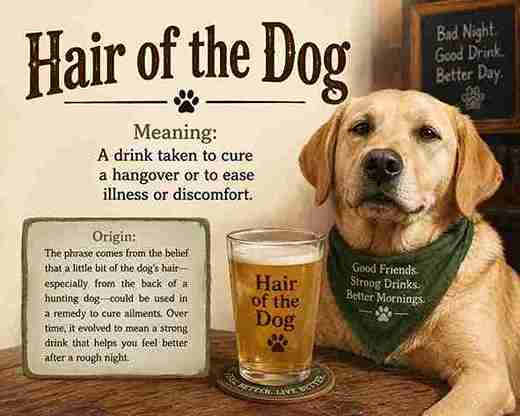
Hair of the Dog Meaning: Does It Really Cure Hangovers?
 Admin USA Journalist
You wake up with a pounding headache, a desert-dry mouth, and a stomach that flips at the thought of movement. A friend texts, “Have a Bloody Mary — hair of the dog, you’ll feel better.” The phrase sounds like wisdom passed down through generations. But what exactly does hair of the dog meaning signal, and can pouring more alcohol into your system really undo the damage? The short answer: no. This article unpacks the real definition, traces its bizarre origin, and lays out why this folk practice is a dangerous trap.
The Real Hair of the Dog Meaning
The full expression is “hair of the dog that bit you.” The hair of the dog meaning points to the idea of treating a hangover by drinking more alcohol — the same substance that caused your misery in the first place. In modern slang, someone might say, “I need a little hair of the dog” to justify an early-morning beer, a mimosa, or a spicy Bloody Mary after a heavy night.
At its core, the phrase refers to a misguided belief: if a dog bites you, applying its hair to the wound will heal it. Transferred to drinking, the logic claims that a small dose of the poison (alcohol) can counteract the larger poison still circulating in your body. The hair of the dog meaning is, therefore, a symptom-trading deal — you delay the worst hangover symptoms by briefly numbing your central nervous system with more alcohol.
You might hear it used like this:
- “Struggling this morning. Pass me a cold one — hair of the dog.”
- “Brunch without a Bloody Mary? That’s the whole point. Hair of the dog, right?”
- “He swears by a whiskey sour for breakfast. Classic hair of the dog routine.”
Where Did the Phrase “Hair of the Dog” Come From?
The hair of the dog meaning didn’t start with brunch cocktails. It emerged from a medieval medical practice. A 1546 collection of proverbs by John Heywood includes the line, “I pray thee, let me and my fellow have a haire of the dog that bit us last night.” The literal belief was that placing burnt hair from the offending dog into a bite wound would prevent infection or rabies.
In ancient times, people applied the same logic to snakebites, scorpion stings, and other animal injuries — fight fire with fire. This “like-cures-like” thinking gradually seeped into drinking culture. By the 16th century, tavern-goers already joked that a morning draught of the same ale that flattened you the night before could set you right.
Key historical shifts that solidified the hair of the dog meaning:
- Heywood’s proverb (1546) – First written record linking the phrase to drinking.
- 17th-century English taverns – Ale as morning-after medicine became a common quip.
- Rise of the cocktail brunch – In the 20th century, drinks like the Bloody Mary and mimosa anchored the concept in social rituals.
- Modern idiom – Shortened to “hair of the dog,” it now lives purely as a hangover myth.
How the Belief in “Hair of the Dog” Works (Supposedly)
People who reach for the hair of the dog meaning as a practical solution buy into a short-lived illusion. Here is the mistaken chain of reasoning:
- A hangover results from alcohol withdrawal — your body reacting as blood alcohol concentration drops.
- Drinking a small amount of alcohol temporarily raises that concentration again.
- For a brief window, the brain’s overexcited glutamate systems calm down, and you feel less shaky and foggy.
- The relief creates the false impression that the “cure” is working.
What actually happens:
You are not healing. You are hitting pause. The hangover returns, often worse, once the second round of alcohol wears off. You have merely dragged out the recovery process and given your liver an additional dose of toxins to metabolize.
The Science of a Hangover: What’s Really Happening in Your Body
To understand why the hair of the dog meaning is deceptive, you must grasp what a hangover truly is. A hangover is a multi-system biological storm.
Primary hangover triggers:
- Dehydration and electrolyte loss – Alcohol suppresses vasopressin, an antidiuretic hormone, causing fluid loss.
- Acetaldehyde buildup – The liver breaks down ethanol into acetaldehyde, a compound up to 30 times more toxic than alcohol itself.
- Inflammatory response – The immune system releases cytokines, producing headache, fatigue, and brain fog.
- Glutamine rebound – Alcohol blocks glutamine, a natural stimulant. When drinking stops, glutamine surges, disrupting sleep and causing jitters.
- Low blood sugar – Alcohol can cause blood sugar to crash, leading to weakness and irritability.
Adding more alcohol (the hair of the dog approach) doesn’t replenish fluids, clear acetaldehyde, or calm the inflammatory storm. It only postpones the inevitable crash.
Does Hair of the Dog Actually Work?
If you define “works” as delaying agony for 30 to 90 minutes, then technically, yes. If you define it as a genuine cure, absolutely not. The hair of the dog meaning promises rescue but delivers a merciless extension of suffering.
Short-term, alcohol releases dopamine and enhances GABA activity — you feel a fleeting lift. Yet this blip masks worsening dehydration and prolongs the elimination of toxic byproducts. Studies show that the practice can shift a person from social drinking to a morning drinking pattern, a red flag for alcohol use disorder.
Quick reality check:
- Real hangover recovery time without intervention: 14 to 23 hours, depending on consumption.
- Hair of the dog extends that timeline by hours.
- The only genuine cure is time, hydration, and rest.
Why Drinking More Alcohol to Cure a Hangover Is Dangerous
The hair of the dog meaning hides a dangerous road. Using alcohol to alleviate alcohol withdrawal symptoms, even mild ones, can fast-track dependency. Regular morning drinking desensitizes the brain’s reward system, requiring more alcohol to feel normal.
Concrete risks:
- Liver strain – The liver works overtime to process two rounds of ethanol instead of one.
- Worsening dehydration and electrolyte imbalance – Can trigger heart palpitations and severe headaches.
- Habit formation – Occasional “morning-after” drinking can morph into a daily compulsion.
- Masking alcohol use disorder – If you frequently reach for a morning drink, your body may be signaling a deeper problem.
- Increased accident risk – Still-intoxicated individuals may drive or operate machinery thinking they are “cured.”
Medical professionals universally reject the hair of the dog meaning as valid therapy. The National Institute on Alcohol Abuse and Alcoholism (NIAAA) warns that the only safe approach is to let the body clear alcohol naturally.
What Medical Experts Say About the “Hair of the Dog” Approach
Dr. Sarah Hepburn, a board-certified addiction medicine specialist, states plainly: “Treating a hangover with more alcohol is like treating a burn with more fire. You are not reducing harm; you are compounding it.” Organizations like the Mayo Clinic, the NIAAA, and the World Health Organization all reinforce that no evidence supports the hair of the dog meaning as a safe or effective practice.
Expert consensus in three points:
- No peer-reviewed study endorses it – All clinical data point toward harm.
- It increases total alcohol exposure – This raises cancer risk, cardiovascular strain, and liver damage over time.
- It blurs the line between social drinking and problematic use – Health agencies consider any alcohol consumption before breakfast a warning sign.
The Short-Term Relief vs. Long-Term Harm Trap
The hair of the dog meaning thrives on a dangerous psychological trap. You feel relief for an hour and mistake it for healing. In reality, you have entered a cycle.
That cycle looks like this:
- Night of heavy drinking
- Horrible morning symptoms
- Quick-fix morning drink
- Temporary numbness
- Symptoms return with a vengeance by afternoon
- Wasted day, poor sleep, extended recovery
Break the loop. Replace that morning cocktail with water, electrolytes, and a nutrient-dense meal. Your body repairs on its own terms, not on a liar’s schedule.
5 Safer and More Effective Hangover Recovery Methods
Ditch the hair of the dog meaning and reach for these science-backed recovery strategies instead.
| Method | What It Does | Why It Beats Hair of the Dog |
|---|---|---|
| Electrolyte-rich fluids | Replenishes sodium, potassium, and fluids lost through urination | Attacks dehydration, not just masking symptoms |
| Complex carbohydrates | Stabilizes blood sugar and provides steady energy | Fuels the brain without alcohol’s toxic hit |
| Anti-inflammatory foods | Ginger, turmeric, berries reduce cytokine-driven inflammation | Directly eases headache and body aches |
| Restorative sleep | Allows the brain’s glymphatic system to clear metabolic waste | True repair, not delayed damage |
| Vitamin B6 and B12 support | Helps the liver metabolize alcohol byproducts faster | Supports natural detox pathways |
Immediate action plan:
- Drink 500 ml of water with an electrolyte tablet within 20 minutes of waking.
- Eat two scrambled eggs with whole-wheat toast and a banana.
- Take a short walk outdoors — gentle movement accelerates lymphatic drainage.
- Avoid caffeine for the first two hours; it worsens dehydration.
Cultural Twists: How Different Countries Interpret “Hair of the Dog”
The hair of the dog meaning morphs across cultures, yet the flawed concept remains consistent — use the same poison as the cure.
| Country | Local Hangover “Cure” | What It Actually Translates To |
|---|---|---|
| Germany | Katerfrühstück (hangover breakfast) with beer | Pickled herring, onions, and a small lager |
| Mexico | Michelada or menudo | Spicy beer cocktail or tripe soup — often with beer chaser |
| South Korea | Haejangguk (hangover soup) | Beef broth, vegetables, and sometimes a shot of soju on the side |
| Russia | Rassol (pickle brine) with vodka | Salty brine plus a shot — classic hair of the dog |
| Japan | Ume shiso chazuke | Pickled plum tea over rice, rarely alcohol-based |
Each tradition dresses up the hair of the dog meaning in local flavors, but the physiological betrayal is the same.
Common Myths About Hangover Cures Busted
Hair of the dog meaning feeds on broader hangover mythology. Let’s dismantle them.
- Myth: A greasy breakfast soaks up alcohol.
Fact: Greasy food before drinking slows absorption; after drinking, it may irritate an already-sensitive stomach and does not absorb existing alcohol. - Myth: Coffee sobers you up.
Fact: Caffeine masks drowsiness but does not reduce blood alcohol concentration or speed elimination. - Myth: Throwing up clears the alcohol.
Fact: Alcohol absorbs mostly in the small intestine; vomiting only removes stomach contents, not the alcohol already in your bloodstream. - Myth: Painkillers before bed prevent hangovers.
Fact: Combining acetaminophen and alcohol can cause acute liver damage. NSAIDs may irritate the stomach lining. - Myth: The “hair of the dog” drink works because it replenishes vitamins.
Fact: Tomato juice in a Bloody Mary provides some vitamins, but the alcohol negates any benefit by dehydrating you further.
When a Hangover Might Signal a Deeper Problem
If the hair of the dog meaning feels like a normal part of your routine, pause. Morning drinking, even occasionally, can signal an escalating relationship with alcohol. The Diagnostic and Statistical Manual of Mental Disorders (DSM-5) lists drinking to relieve withdrawal symptoms as a criterion for alcohol use disorder.
Self-check questions:
- Do you plan mornings around having a drink to “take the edge off”?
- Has a friend or family member expressed concern about your morning drinking?
- Do you feel anxious or unable to function without that first drink?
A “yes” doesn’t mean catastrophe, but it does mean a conversation with a healthcare professional is wise. Resources like the Substance Abuse and Mental Health Services Administration (SAMHSA) helpline (1-800-662-4357) offer confidential guidance.
Frequently Asked Questions About Hair of the Dog Meaning
1. What does “hair of the dog” mean in simple slang?
Hair of the dog meaning in slang is drinking alcohol in the morning to relieve a hangover. It’s short for “hair of the dog that bit you,” implying the cure comes from the same source that caused the pain.
2. Is hair of the dog an actual medical treatment?
No. There is zero medical evidence supporting it. All major health organizations reject the practice because it increases total alcohol load and delays true recovery.
3. Why does a Bloody Mary seem to help a hangover?
The alcohol temporarily numbs withdrawal symptoms, while the salt and tomato juice may slightly replenish fluids. However, the net effect is worse dehydration and a longer hangover because your body must now process more alcohol.
4. Can hair of the dog lead to alcohol dependence?
Yes. Using alcohol to fix alcohol withdrawal symptoms, even mild ones, trains the brain to crave it as medicine. This pattern significantly raises the risk of developing alcohol use disorder.
5. What is the origin of the phrase “hair of the dog that bit you”?
It comes from a medieval belief that placing hair from a dog that bit you into the wound would prevent rabies. John Heywood’s 1546 proverb collection first connected the saying to drinking.
6. How long should you wait before drinking again after a hangover?
At a minimum, allow 48 alcohol-free hours for your liver, brain, and gut to repair. The World Health Organization emphasizes that no amount of alcohol is truly safe, but if you drink, spacing out sessions reduces harm.
Next time someone hands you a morning cocktail and whispers the hair of the dog meaning like a secret cure, you can smile — and reach for a glass of water instead. True recovery doesn’t come from a bottle masquerading as medicine. It comes from rehydrating, eating nourishing food, and letting your body do what it does brilliantly on its own: heal. If you found this eye-opening, share it with a friend who still believes the myth. And if morning drinking feels less like a joke and more like a need, talk to a professional today — your future self will thank you.
Recommended For You