
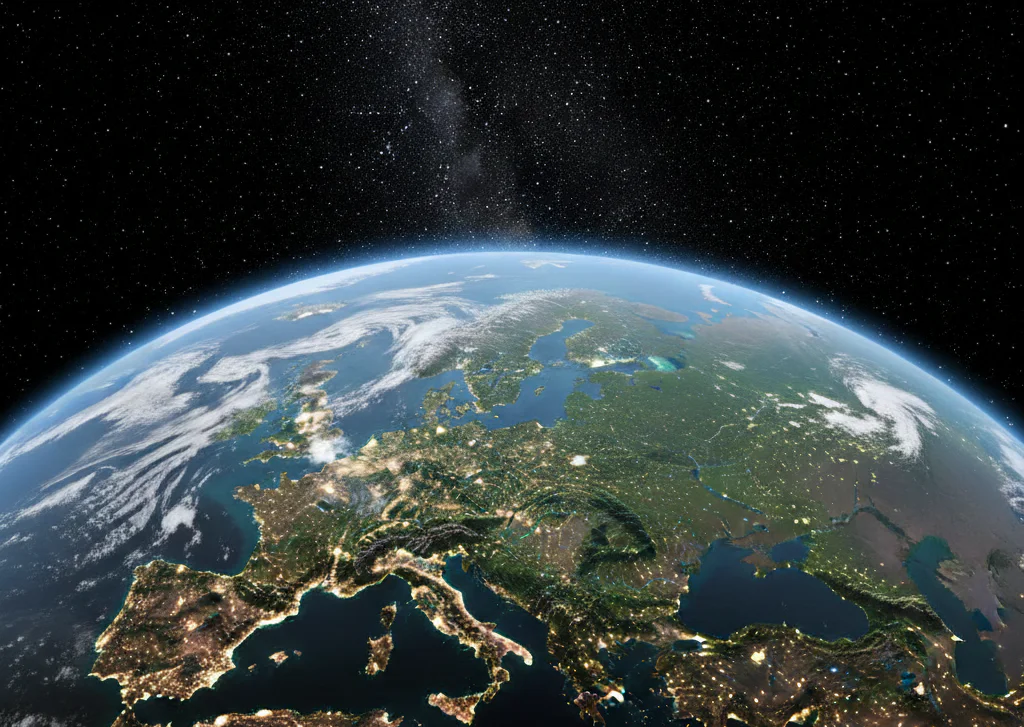
Map of Europe
Atlas Series • Europe
Exploring the Map of Europe: Your Guide to Countries, Borders, and History
Have you ever looked at a map of Europe and wondered how so many different countries fit together? It is like a giant, colorful puzzle! Europe is a small continent, but it has a very big personality. From the sunny beaches of Spain to the icy forests of the north, there is so much to see. In this guide, we are going to dive deep into the world of maps. We will look at where Europe ends and where other places begin. Whether you are a student or just curious, you will find everything you need to know right here!
Fast Understanding
Europe’s layout, regions, and borders made simple.
Geography + History
How mountains, rivers, and events shaped the map.
Learning Friendly
Clear headings, FAQs, and a clean facts table.
Looking at a map of Europe is like taking a trip through time. Every line on the map tells a story about kings, explorers, and modern leaders. Today, the continent is home to about 44 countries. Some are huge, like France, while others are so tiny you could walk across them in a few hours! Understanding these shapes helps us understand our world. Let’s start our journey by looking at the basic layout of this amazing place.

What Does the Map of Europe Look Like?
When you first see a map of Europe, you might notice it looks like a big peninsula. This means it is surrounded by water on three sides. To the north is the cold Arctic Ocean. To the west is the vast Atlantic Ocean. And to the south, you will find the beautiful, blue Mediterranean Sea. Because there is so much water nearby, many European countries have famous sailors and great seafood!
The land itself is very diverse. If you look at the middle of the map of Europe, you will see flat areas called plains. These are great for farming. But if you look further south, you will see big bumps on the map. These are mountain ranges like the Alps and the Pyrenees. These mountains act like natural walls between countries. They are also great places for skiing and hiking.
The Special Map of Europe and Asia
Did you know that Europe and Asia are actually part of the same big piece of land? Scientists call this landmass Eurasia. When we look at a map of Europe and Asia, it can be hard to tell where one starts and the other ends. There is no ocean between them! Instead, geographers use landmarks to draw the line.
The most famous “border” on the map of Europe and Asia is the Ural Mountains. These mountains run through Russia like a spine. To the west of the mountains, you are in Europe. To the east, you are in Asia. Other borders include the Ural River and the Caucasus Mountains. It is amazing how nature helps us decide where one continent stops and another begins!
Understanding the Map of Europe and Russia
Russia is a very special case on any map. It is so big that it sits on two continents at once! When you look at a map of Europe and Russia, you will see that the western part of the country is in Europe. This is where most people live, in famous cities like Moscow and Saint Petersburg. However, the largest part of Russia actually stretches across Asia all the way to the Pacific Ocean.
Because of this, Russia is called a “transcontinental” country. On a map of Europe and Russia, the European side feels very different from the Asian side. The European part has more cities and historical buildings. The Asian part, often called Siberia, has vast forests and very cold winters. It is like having two worlds inside one giant country!
Quick Facts: European Geography Table
| Feature | Description | Key Locations |
|---|---|---|
| Largest Country | Russia (European part) | Moscow, St. Petersburg |
| Highest Mountain | Mount Elbrus | Caucasus Mountains |
| Longest River | Volga River | Russia |
| Biggest Island | Great Britain | United Kingdom |
| Smallest Country | Vatican City | Inside Rome, Italy |
| Major Sea | Mediterranean Sea | South of Europe |
Note: “Export to Sheets” is not included here because you asked for no external links.
The Main Regions of the European Map
To make it easier to learn, geographers often split the map of Europe into four or five main parts. First, there is Northern Europe. This includes places like Norway and Sweden, which are known for being cold and beautiful. Then we have Southern Europe. Think of Italy and Greece—lots of sun and ancient history!
Next is Western Europe, which has famous powerhouses like France and Germany. Eastern Europe is the largest region and includes countries like Poland and Ukraine. Some people also talk about Central Europe, which sits right in the heart of the continent. Each part of the map of Europe has its own special food, language, and traditions.
Famous Landmarks on the Map
If you zoom in on a map of Europe, you can find some of the most famous buildings in the world. In France, the Eiffel Tower stands tall in Paris. In Italy, the Colosseum reminds us of the Roman Empire. These landmarks are more than just pretty pictures; they are symbols of European culture.
Many people use a map of Europe to plan their dream vacations. You can see how close these countries are. You could eat breakfast in London, take a train under the sea, and have lunch in Paris! The map shows us that even though these countries have different languages, they are very connected to each other.
How the Map Has Changed Over Time
The map of Europe we see today is not how it always looked. Long ago, the Roman Empire controlled almost half of the continent! Later, there were many wars that changed where the borders were drawn. In 1991, a big change happened when the Soviet Union broke apart. This created many new countries like Estonia, Latvia, and Lithuania.
History is always moving, and sometimes the map of Europe moves with it. Even today, countries might join groups like the European Union. This makes the borders feel “softer” because people can travel between them more easily. It is like the map is a living, breathing thing that grows and changes over hundreds of years.
The Role of the European Union
When you look at a political map of Europe, you might see a circle of gold stars. This is the symbol of the European Union (EU). The EU is a group of 27 countries that work together to help each other. They use the same money, called the Euro, in many places. This makes it easier for people to buy things and work in different countries.
The EU has helped make the map of Europe feel more united. Before, you would need a passport and a different kind of money every time you crossed a border. Now, in many parts of Europe, you can just drive across the line without stopping. It makes the continent feel like one big neighborhood!
Why We Still Use Paper Maps
In a world with GPS and smartphones, you might think we don’t need a paper map of Europe anymore. But paper maps are still very useful! They help us see the “big picture.” When you look at a large map, you can see how far Italy is from Norway in a way that a small phone screen can’t show.
Maps are also great for learning. Teachers use a map of Europe to show students where historical events happened. Decorating a room with a map can also spark your imagination. You might look at a tiny island and think, “I wonder what it’s like to live there?” Maps aren’t just for directions; they are for dreaming.
Frequently Asked Questions (FAQs)
There are about 44 countries in Europe today. This number can change slightly depending on how you define a “country.” Some small regions want to be independent, but they aren’t officially recognized by everyone yet.
Turkey is like Russia—it is in both! A small part of Turkey, called East Thrace, is in Europe. The rest of the country is in Asia. The famous city of Istanbul actually sits on both continents!
Russia is the largest. Even though a lot of Russia is in Asia, its European side is still bigger than any other country in Europe. France and Ukraine are the next biggest countries.
The Atlantic Ocean is to the west. It separates Europe from North America. Many famous explorers sailed across this ocean hundreds of years ago.
Wiggly lines usually follow nature, like rivers or mountains. Straight lines are often drawn by people using rulers on a map. In Europe, most borders are wiggly because they have been there for a long time!
If you are in the “Schengen Area,” yes! This is a group of European countries that have agreed to let people travel across their borders without showing a passport every time.
Conclusion: The Beauty of the Map
As we have seen, the map of Europe is much more than just lines on a page. It is a guide to different cultures, huge mountains, and deep history. From the connection on the map of Europe and Asia to the massive span of the map of Europe and Russia, there is always something new to learn. Understanding the map helps us feel more connected to the people who live across the ocean.
Whether you are studying for a test or planning a trip, keep exploring! Every time you look at a map of Europe, try to find a country you’ve never heard of. Look up what they eat or what language they speak. The world is a big, beautiful place, and the map is your key to unlocking its secrets.
You also like to read About: Burt Thicke
Want another interesting read? Tap the button below.
Read About Burt Thicke →About the Author
